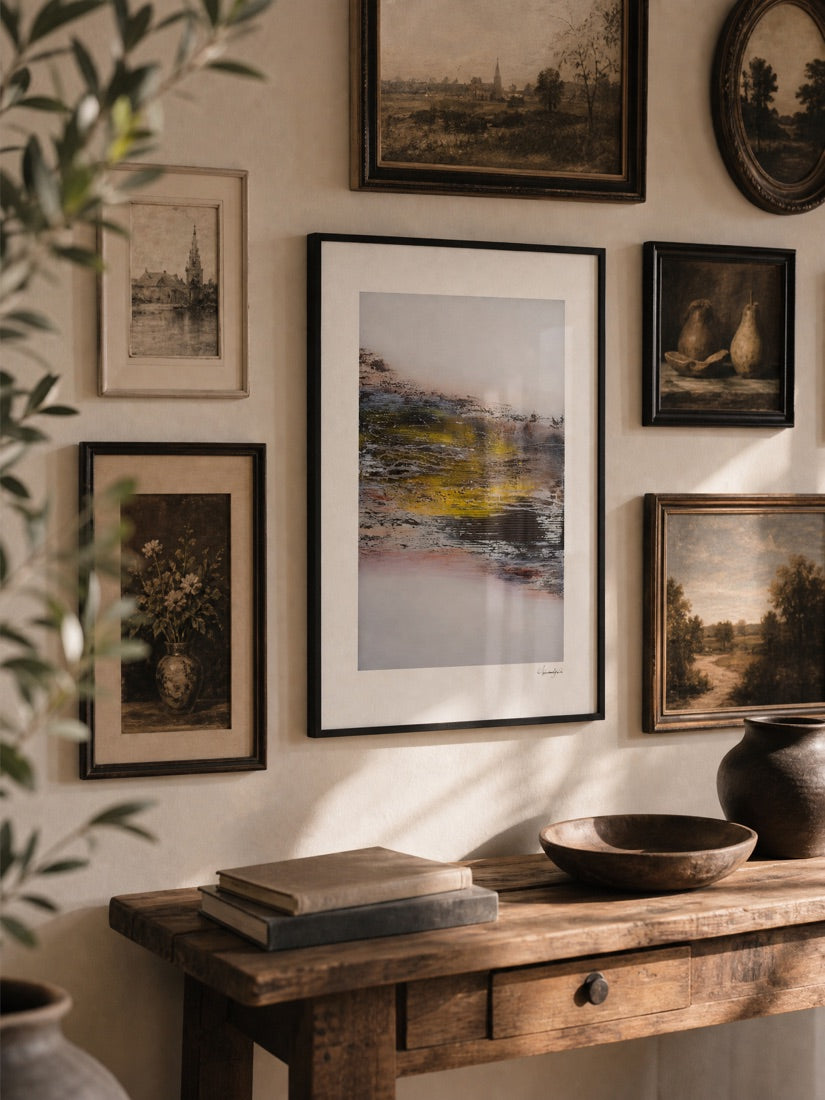
How to Build a Gallery Wall
A gallery wall holds together the way a good sentence does: nothing spare, nothing missing. It is the most forgiving way to live with several works at once, and the most rewarding to get right.
Here is the edit that started ours, three pieces hung close and in conversation, on a wall that earns a second look. Below are the works, the thinking behind the arrangement, and the principles to build your own. New to hanging art? Start with how to choose art for your space.
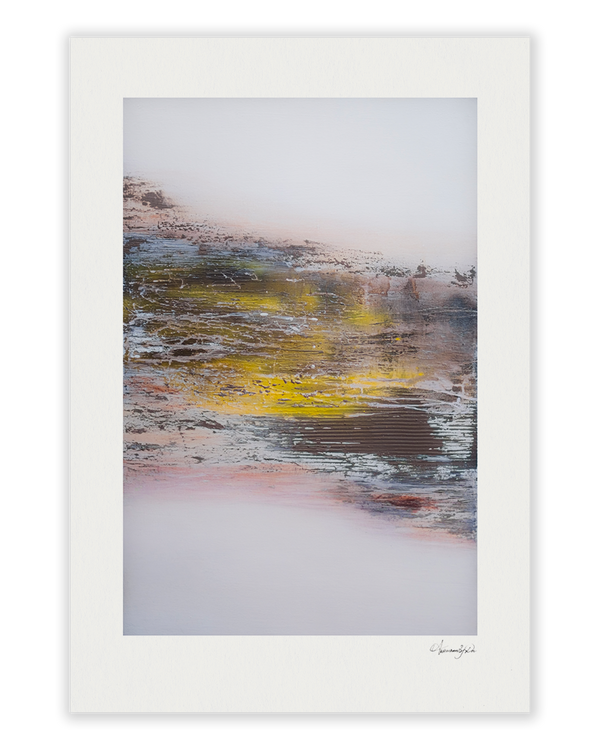
Dusk Over Ridge
From ₹ 16,603The anchor. Its horizon line sets the eye level for the whole wall.

Happy Tortoise
From ₹ 16,603The quiet counterweight, earth tones that echo the anchor without repeating it.
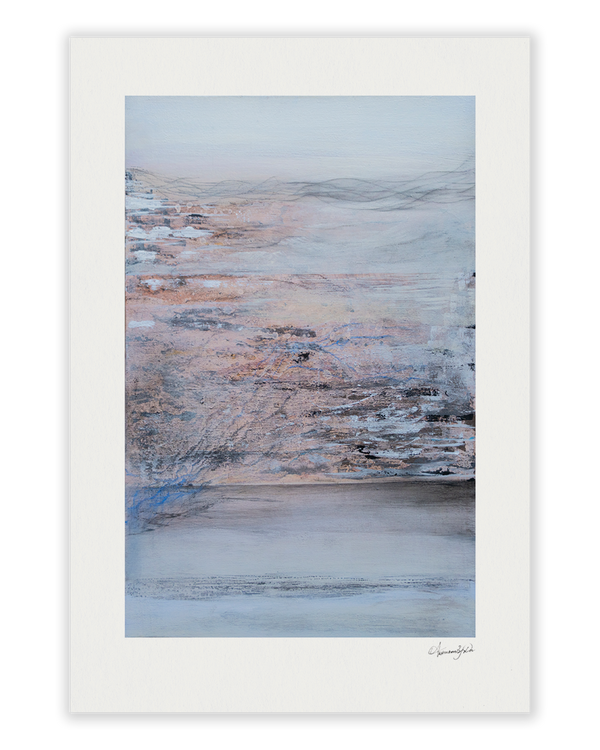
Where Rivers Rest
From ₹ 6,129The breath between, calmer in subject so the group never crowds.
Composition before content. A gallery wall is read as one shape before any single image is seen. Decide the outer silhouette first, a tidy rectangle for calm or a looser cluster for energy, and let the works fall inside it.
One voice, many sentences. The pieces do not need to match, but they need to belong. A shared palette, a recurring subject, or a single frame colour is enough to make difference feel deliberate rather than accidental.
Rhythm needs rest. A quieter work between two busy ones gives the eye somewhere to land. Without that pause, the wall reads as noise instead of music.
Weight sits low and central. The largest or darkest piece anchors the group near the middle, a little below centre. Lighter works rise and spread from it, the way a plant grows from its base.
The wall is never finished. The best gallery walls are added to over years. Leave room. A collection that grows one considered choice at a time always outlives one bought in a single afternoon.
Start with an anchor
Choose the largest or darkest piece first and place it slightly off-centre. Build the rest of the wall outward from there.
Keep the gaps even
Leave 5 to 8 cm between frames. Consistent spacing reads as one composition; uneven gaps scatter it.
Lay it out on the floor first
Arrange the group on the ground, photograph it from above, then hang to that plan. It saves the wall from extra holes.
Cut paper templates
Trace each frame onto paper, tape the shapes to the wall, and live with them for a day before a single nail goes in.
Hang to a centre line
Keep the midpoint of the group at eye height, around 57 to 60 inches. Aligning the tops of unequal frames makes them look wrong.
Vary sizes, hold the frame
Mix the artwork sizes freely, but keep the frame colour and mount consistent so the variety reads as intent, not accident.
From the Journal
 Start here
Hanging Works in Pairs
Two works hung well read as one thought. How to pair prints by palette and format, spacing that works, and which works in the archive were made as companions.
 Gifts for People Who Already Love Art
Gifting to someone with strong taste is a losing game unless you change the rules. What...
 A Housewarming Gift That Stays
Most housewarming gifts get used up or put away. A fine art print is the first...
 A Gift for a First Home Together
Registries fill kitchens. Almost nothing on them goes on a wall. Why a work chosen for...