How to Hang Art
Hanging art is the one step that decides whether a good print looks considered or accidental, and it is the step most people rush. The work itself does not change; its height, its spacing, and its relationship to the furniture below do all the talking.
Here is a short, practical guide: the heights, the measurements, and the principles that hold whether you are hanging a single piece or a wall of them.
The eye, not the ceiling, sets the height. Rooms vary; eye level does not. Aim for the centre of the work at around 57 to 60 inches and a wall of mismatched ceilings will still feel right. Hanging to the ceiling or the furniture top is the most common error.
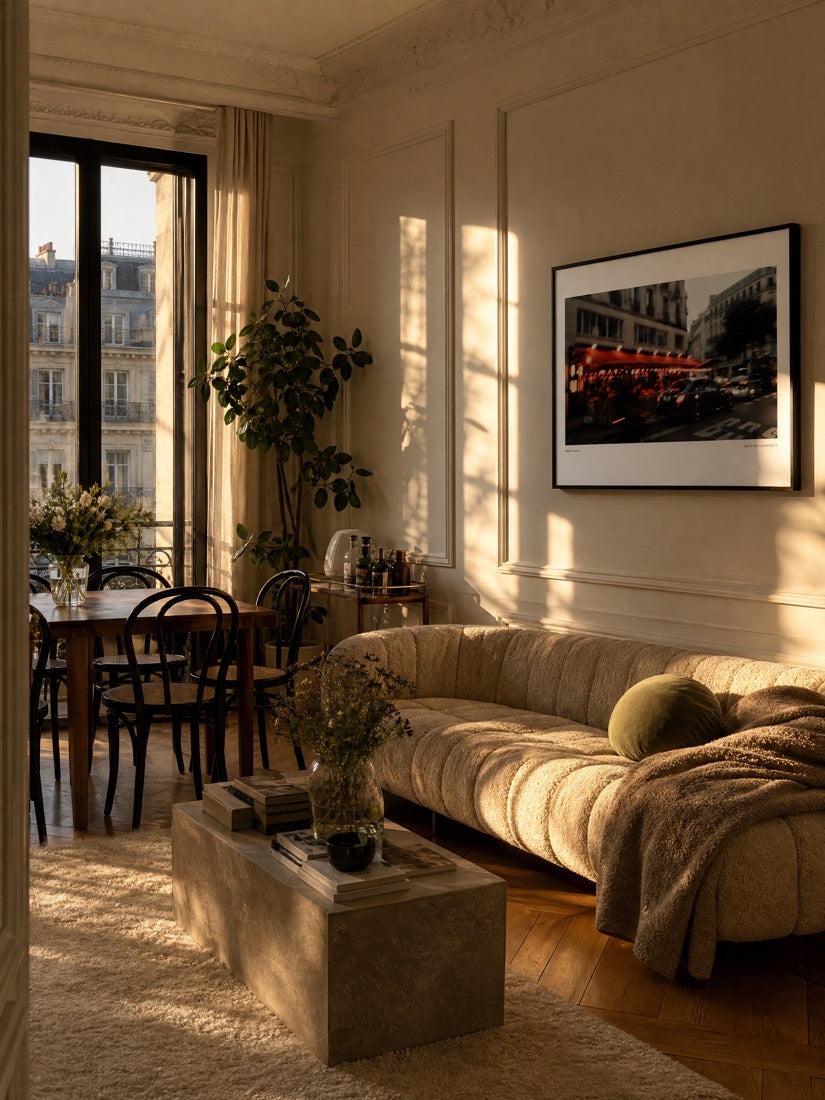
Art belongs to what sits below it. A picture above a sofa, console, or bed is read as a pair with that furniture. Keep them close, within a hand's width or two, and size the art to the furniture's width. Float it too high and the two stop speaking.
Measure twice, nail once. Most crooked, too-high art is a measuring problem, not a taste problem. Account for the drop from hook to frame-top, mark with a pencil and a level, and the result looks intentional every time.
Protect what you hang. Direct sun and damp are the enemies of any print. Hang out of all-day light, and on a humid or sunlit wall, ask for protective glazing. Read how to choose art for your space for the full picture.
Hang at 57 to 60 inches
Centre the work about 57 to 60 inches (145 to 152 cm) from the floor. This is gallery height: it meets the eye of someone standing.
Relate art to furniture
Above a sofa or bed, leave 10 to 25 cm between the top of the furniture and the bottom of the frame so the two read as one group.
Two-thirds is the rule
A piece, or a group, should span roughly two-thirds to three-quarters of the furniture below it. Width matters more than height.
Measure from the hook, not the top
The frame hangs from its wire or hook, which sits below the top edge. Measure the drop first, then mark, or you will hang too high.
Use paper templates
Trace the frame onto paper, tape it to the wall, and step back. Adjust the paper, not the plaster. Mark the nail point through it.
Two hooks beat one
For anything larger than A4, use two hooks set a third in from each edge. The piece sits level and stays that way.
Mind the light
Keep work out of direct, all-day sun, which fades any print over time. A matte cotton surface also reads better in side light, with no glare.
When in doubt, size up
The most common regret is choosing too small. One larger piece almost always reads better than a cluster of small, safe ones.
From the Journal
 Start here
Hanging Works in Pairs
Two works hung well read as one thought. How to pair prints by palette and format, spacing that works, and which works in the archive were made as companions.
 Gifts for People Who Already Love Art
Gifting to someone with strong taste is a losing game unless you change the rules. What...
 A Housewarming Gift That Stays
Most housewarming gifts get used up or put away. A fine art print is the first...
 A Gift for a First Home Together
Registries fill kitchens. Almost nothing on them goes on a wall. Why a work chosen for...